Meta Tag Generator
Generate SEO-friendly meta tags for your website – title, description, keywords, robots and more. A meta tag generator creates correct HTML code for the head section of your page, so search engines show a better title and snippet. Key features: SEO focused, instant output and free. It is 100% free, works on mobile and desktop and needs no sign-up – just open the tool and start now.
Share on Social Media:


Meta Tag Generator is a free online meta tag generator by 𝐏ᴅꜰ𝐒ᴇᴏ𝐓ᴏᴏʟ𝐬.𝐂ᴏᴍ. Generate SEO-friendly meta tags for your website – title, description, keywords, robots and more.
In short: add your page details, click the button and get your meta tags in seconds. It works in any browser on mobile and desktop, with no sign-up and no software to install.
How to Use Meta Tag Generator (4 Quick Steps)
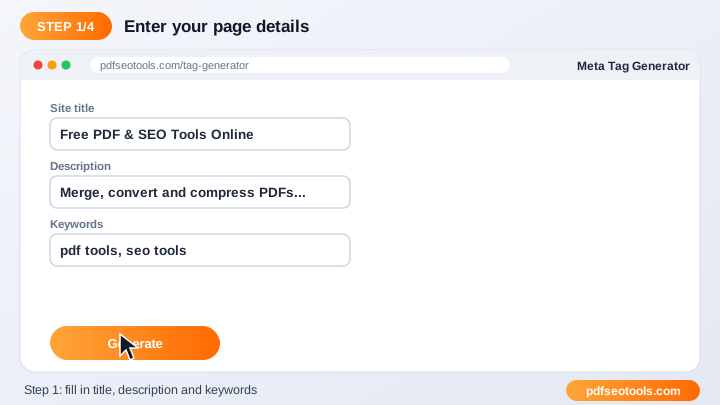
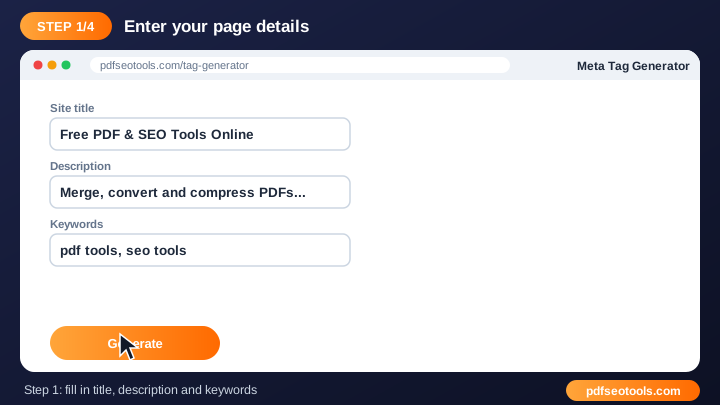
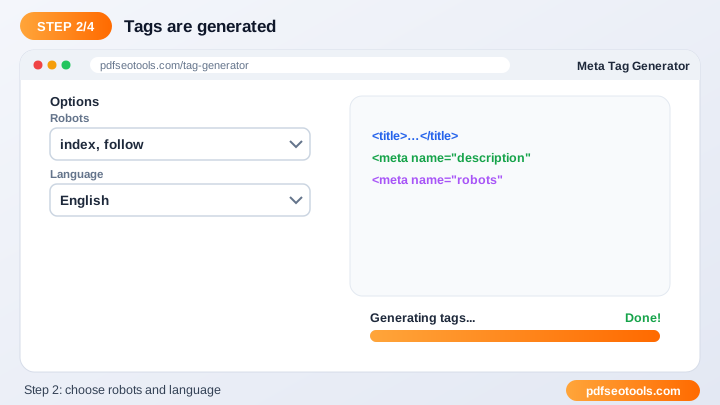
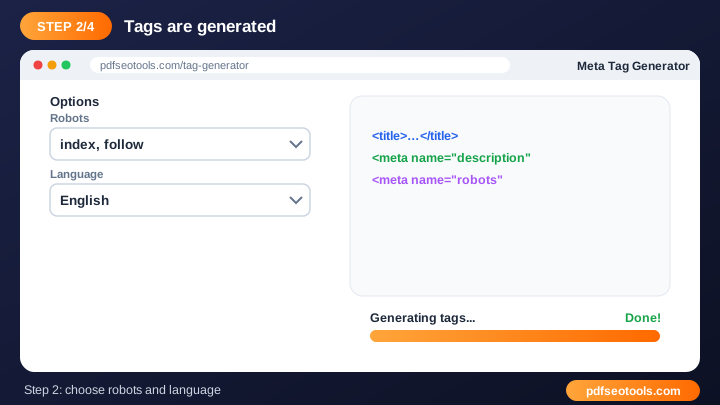
To use the Meta Tag Generator, follow these 4 simple steps:
- Step 1: Enter your page URL or fill in your page details.
- Step 2: Click the generate / analyze button.
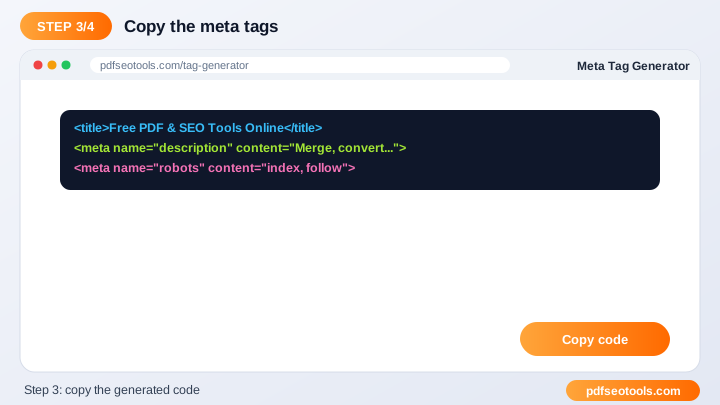
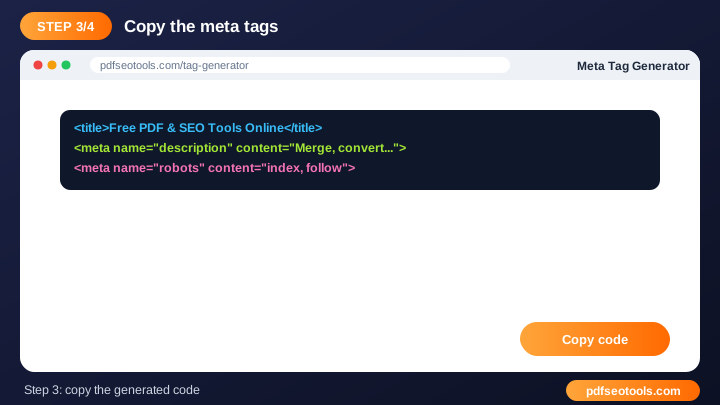
- Step 3: Review the meta tags and suggestions.
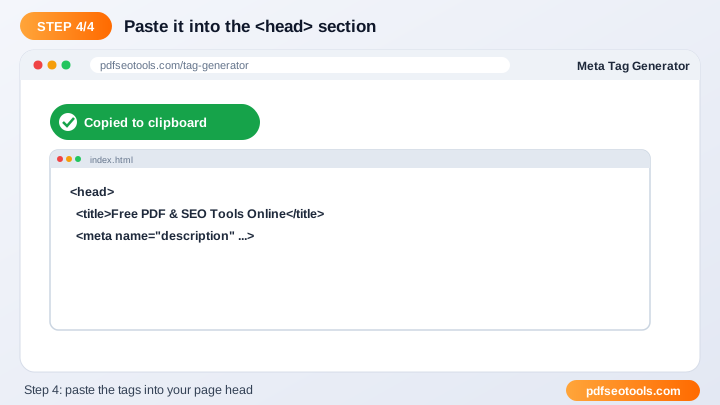
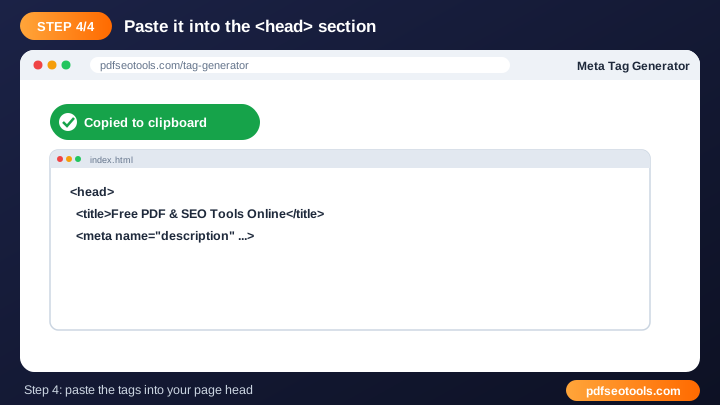
- Step 4: Copy the code or fix the issues on your website.
What is Meta Tag Generator?
Meta Tag Generator is a browser-based meta tag tool that turns page details into meta tags without installing any software. A meta tag generator creates correct HTML code for the head section of your page, so search engines show a better title and snippet.
Meta Tag Generator – Quick Facts
| Feature | Details |
|---|---|
| Tool type | Free online meta tag generator |
| Input | page details |
| Output | meta tags |
| Price | Free – no hidden charges |
| Sign-up required | No |
| Installation | Not required (works in the browser) |
| Supported devices | Windows, macOS, Linux, Android and iPhone |
| Connection | Secure HTTPS |
| Steps to finish | 4 |
How Does Meta Tag Generator Work?
The tool either fetches your page and reads the tags inside the <head> section, or builds new tags from the details you enter. It then shows the result together with length checks and recommendations.
Key Features of Meta Tag Generator
- SEO focused: Built around the meta tags search engines actually use.
- Instant output: Get results or ready-made code in seconds.
- Free: Use the Meta Tag Generator as often as you like.
- Beginner friendly: Clear guidance even if you are new to SEO.
- Works with any CMS: WordPress, Blogger, Laravel, Shopify or hand-coded sites.
- Mobile ready: Use it from any device.
Meta Tag Generator Analytics: Online Tool vs Other Methods
An online meta tag generator is faster to start than manual work or desktop software, because there is nothing to download, install or update. The table below summarises the difference.
| Criteria | Manual method | Desktop software | Meta Tag Generator |
|---|---|---|---|
| Cost | Your time | Often paid | Free |
| Installation | None | Required | None |
| Works on mobile | Difficult | Limited | Yes |
| Learning curve | High | Medium | Low |
| Updates | — | Manual | Automatic |
Who Uses Meta Tag Generator? (Common Use Cases)
Students, bloggers, office workers, business owners and developers use this free meta tag tool for tasks like:
- Launching a new website
- Improving click-through rate
- Blogger and WordPress SEO
- Fixing missing meta tags
Common Problems and How to Fix Them
Meta tags not detected
Make sure the page is public and not blocked by robots or a login.
Google shows a different title
Google may rewrite titles; keep titles relevant, unique and around 50–60 characters.
Changes not visible
Clear your site and browser cache, then re-check the page.
Tips for Best Results
- Keep titles around 50–60 characters and descriptions around 150–160 characters.
- Use your main keyword naturally near the start of the title.
- Write a unique title and description for every page.
- Re-check pages after updating your theme or plugins.
Common Mistakes to Avoid
- Using the same title and description on many pages.
- Writing titles longer than about 60 characters.
- Stuffing keywords into meta tags.
- Forgetting to add Open Graph tags for social sharing.
Why Use Meta Tag Generator on 𝐏ᴅꜰ𝐒ᴇᴏ𝐓ᴏᴏʟ𝐬.𝐂ᴏᴍ?
𝐏ᴅꜰ𝐒ᴇᴏ𝐓ᴏᴏʟ𝐬.𝐂ᴏᴍ gives you a fast, private and free meta tag generator with a clean interface and no sign-up. The page is mobile friendly, loads quickly and sits next to many related PDF, image, text and SEO tools, so you can finish your whole workflow in one place.
Related Free Tools
- Meta Tag Analyzer – free online meta tag analyzer
Need Help? Website Support
If the Meta Tag Generator does not work as expected, refresh the page, use the latest Chrome, Edge, Firefox or Safari, and check that your input is correct. Still need help or want to suggest a new feature? Contact the 𝐏ᴅꜰ𝐒ᴇᴏ𝐓ᴏᴏʟ𝐬.𝐂ᴏᴍ support team.
Frequently Asked Questions (FAQ)
Where do I paste the code?
Inside the <head> section of your page.
Will it improve rankings?
Good titles and descriptions improve relevance and clicks.
Is it free?
Yes.
Is the Meta Tag Generator safe to use?
Yes. 𝐏ᴅꜰ𝐒ᴇᴏ𝐓ᴏᴏʟ𝐬.𝐂ᴏᴍ uses a secure HTTPS connection, and files or text you submit are processed only to give you the result. Uploaded files are removed automatically.
Do I need to create an account to use the Meta Tag Generator?
No. You can use the Meta Tag Generator for free without registration. Simply open the page and start using it.
Does the Meta Tag Generator work on mobile phones?
Yes. The tool is fully responsive and works in Chrome, Safari, Firefox, Edge and other browsers on Android, iPhone, Windows and Mac.
Conclusion
The Meta Tag Generator is a quick, free and secure way to turn page details into meta tags. Bookmark this page so the meta tag generator is always one tap away, and share it with anyone who needs it.