
How Search Engine Spiders See Your Page (and Why It Matters)

A spider simulator shows the text, links and meta data crawlers can read. Website checkers find technical problems – expired SSL, broken links, missing compression and content crawlers cannot read. This guide explains the basics in simple words, with tables, examples and free tools you can try right away.


How Search Engine Spiders See Your Page – The Short Answer
Website checkers find technical problems – expired SSL, broken links, missing compression and content crawlers cannot read.
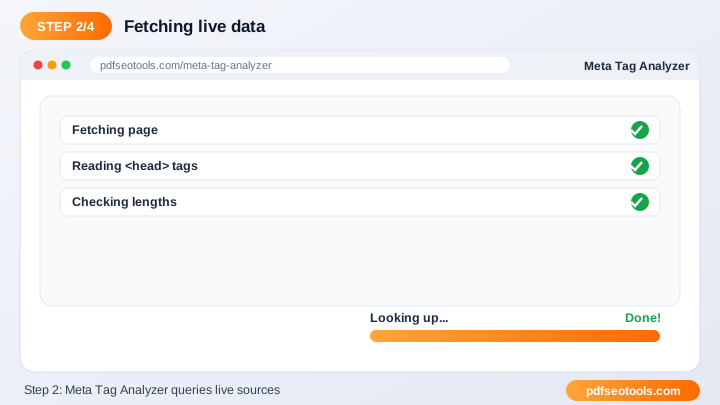
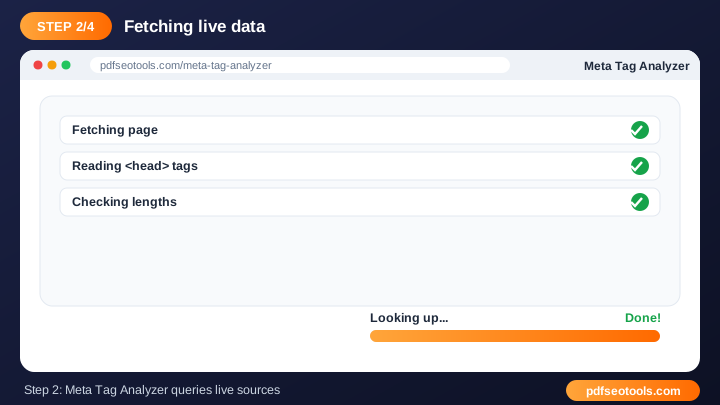
The checker sends a request to your website like a browser or search-engine crawler would. It reads the server response, headers and page content, then reports what it finds along with problems to fix.
Quick Reference Table
| Check | Healthy result | Why it matters |
|---|---|---|
| SSL | Valid, not expired | Trust and HTTPS ranking signal |
| Compression | GZIP or Brotli on | Faster pages |
| Links | No 404 errors | Better user experience |
| Crawlability | Text readable by bots | Content can be indexed |
Tables like this make it easy to compare options at a glance. Bookmark this page to use it as a quick reference.
How Spider Simulator Works in Practice
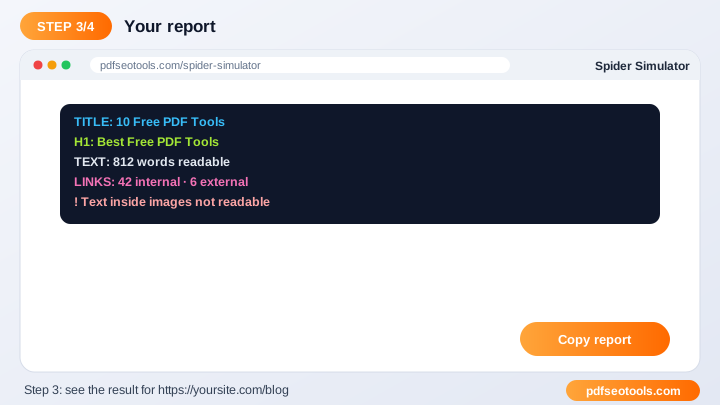
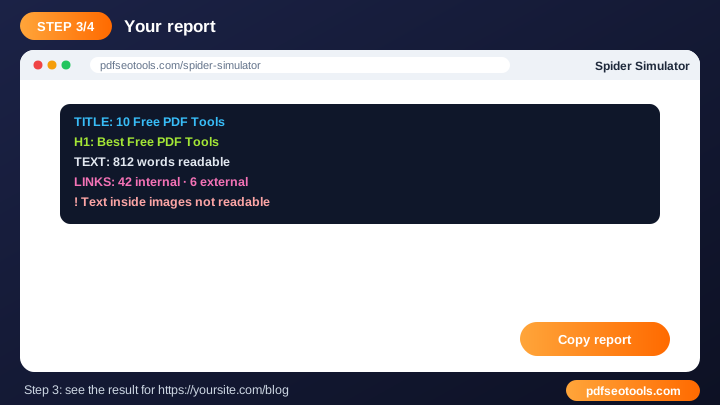
A spider simulator shows the text, links and meta data crawlers can read. Content hidden in images or scripts may not be visible to search engines.
Where This Is Used
- Technical SEO audits
- Checking crawlable content
- Link audits
- Debugging JS sites
Tools That Help
Meta Tag Analyzer
Analyse the meta tags of any web page – title, description, keywords, robots and Open Graph tags. Use Meta Tag Analyzer free.
Google Cache Checker
Check the cache and indexing status of your web pages. Use Google Cache Checker free.
Check GZIP Compression
Check whether GZIP or Brotli compression is enabled on your website. Use Check GZIP Compression free.
Why It Matters
- Technical SEO check: Find issues that can hurt rankings and user experience.
- Quick report: Results are ready in seconds.
- Free: Use the Spider Simulator as often as needed.
- No login: Start checking immediately.
- Any website: Works with WordPress, Blogger, custom and e-commerce sites.
- Device friendly: Run checks from desktop or mobile.
Real-World Use Cases
Using Spider Simulator
A spider simulator shows the text, links and meta data crawlers can read. Content hidden in images or scripts may not be visible to search engines. Common uses: technical seo audits, checking crawlable content, link audits, debugging js sites. Open Spider Simulator.
Using Meta Tag Analyzer
Meta tags tell search engines and social networks what a page is about. The analyzer shows what is present, what is missing and how to improve it. Common uses: auditing your pages, checking competitor titles, fixing missing descriptions, preparing pages for social sharing. Open Meta Tag Analyzer.
Using Google Cache Checker
Cache and index checks show whether search engines have saved a copy of your page and when it was last crawled. Common uses: checking indexing, monitoring crawl activity, troubleshooting seo, verifying updates. Open Google Cache Checker.
Using Check GZIP Compression
Compression shrinks HTML, CSS and JS before sending them to visitors. Enabling it can reduce transfer size dramatically and improve page speed. Common uses: speed optimisation, server configuration checks, seo audits, hosting comparisons. Open Check GZIP Compression.
Key Facts to Remember
- Check both the www and non-www versions of your site.
- Fix critical errors first, then warnings.
- Re-test after each change to confirm the fix.
- Run regular checks as part of your monthly SEO routine.
Common Misunderstandings
- Checking only the homepage instead of important inner pages.
- Ignoring the www vs non-www and http vs https versions.
- Fixing warnings before critical errors.
- Not re-testing after making a fix.
How to Get Started
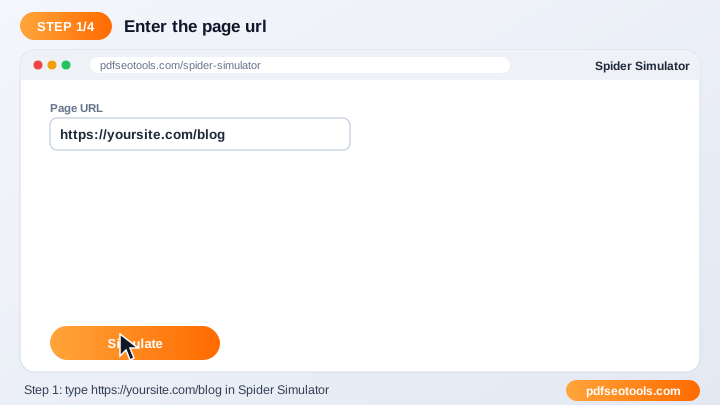
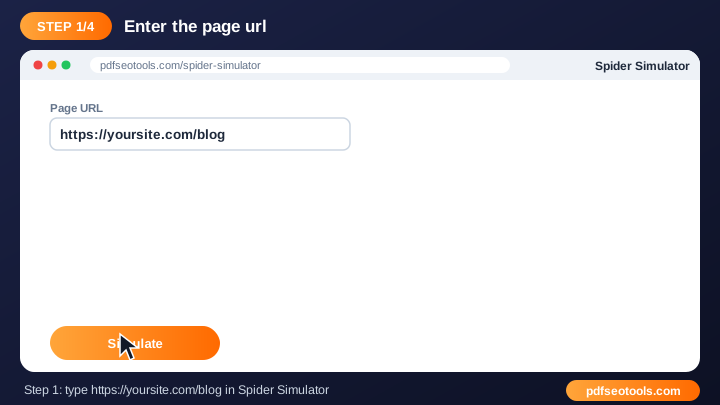
- Enter the website URL in the box.
- Click the check button.
- Wait a few seconds while the page is analysed.
- Read the results and fix any problems that are found.
Worked Example
Example: an old blog post links to a page that was deleted. A broken link checker finds the 404; you either update the link to a relevant live page or add a 301 redirect, so visitors and crawlers no longer hit a dead end.
Glossary of Key Terms
- SSL/TLS certificate
- Enables HTTPS and encrypts data between visitors and your site.
- 404 error
- A page or link that cannot be found.
- GZIP / Brotli
- Compression methods that shrink files sent by the server.
- Crawler (spider)
- A bot that reads pages for a search engine.
- Index
- The database of pages a search engine can show in results.
Best Practices
Check SSL expiry dates, run a broken-link scan monthly, keep important text as real HTML (not inside images) and make sure compression is enabled on your server.
How It Works Behind the Scenes
The checker sends a request to your website like a browser or search-engine crawler would. It reads the server response, headers and page content, then reports what it finds along with problems to fix.
Key Takeaways
- A spider simulator shows the text, links and meta data crawlers can read.
- Check both the www and non-www versions of your site.
- Fix critical errors first, then warnings.
- Use the free Spider Simulator to get the job done in seconds.
Related Free Tools
- Meta Tag Analyzer – Analyse the meta tags of any web page – title, description, keywords, robots and Open Graph tags.
- Google Cache Checker – Check the cache and indexing status of your web pages.
- Check GZIP Compression – Check whether GZIP or Brotli compression is enabled on your website.
Explore all Free Website Checkers on pdfseotools.com.
Frequently Asked Questions
Why is my content missing?
It may be loaded by JavaScript or inside images.
Does it show links?
Yes, internal and external links are listed.
Is it free?
Yes, completely free.
Is it free to use?
Yes. All tools mentioned in this guide are free on pdfseotools.com, with no sign-up and no installation.
Does it work on mobile?
Yes. The tools work in Chrome, Safari, Firefox and Edge on Android, iPhone, Windows and Mac.
Conclusion
How Search Engine Spiders See Your Page is quick and easy with the right tool. Bookmark the Spider Simulator and explore more website checkers to finish your work faster – free, secure and on any device.