
How to Create an XML Sitemap and Submit It to Google

To create an xml sitemap and submit it to google, open the free XML Sitemap Generator on pdfseotools.com, enter the URL, code or details requested by the tool, then run the tool and download or copy the result. It takes under a minute, works on mobile and desktop, and needs no sign-up.


What Is XML Sitemap Generator and Why Use It?
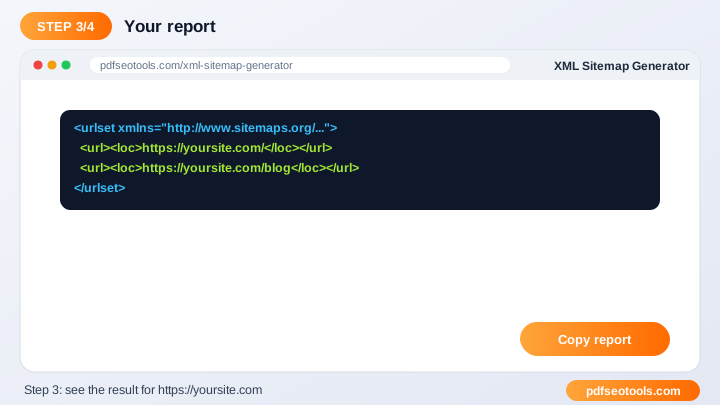
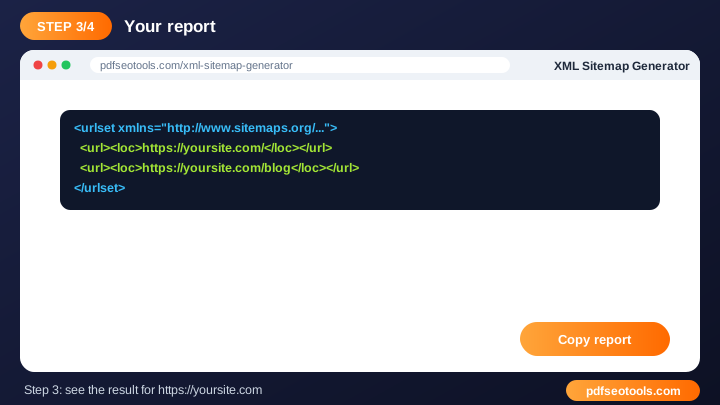
An XML sitemap lists the important URLs of your website. Submitting it in Google Search Console helps search engines find and index pages faster.
Generate an XML sitemap for your website and help Google crawl all your pages.
You can use it for tasks such as: new websites, sites with many pages, after site migrations, faster indexing.
How to Create an XML Sitemap and Submit It to Google – Step-by-Step
Follow these 4 simple steps. Each step takes only a few seconds.
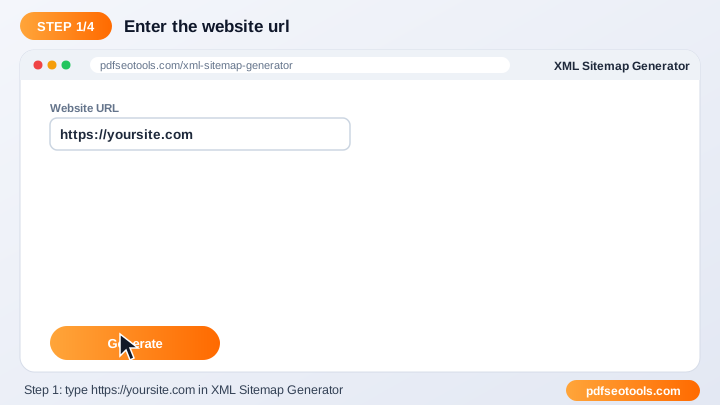
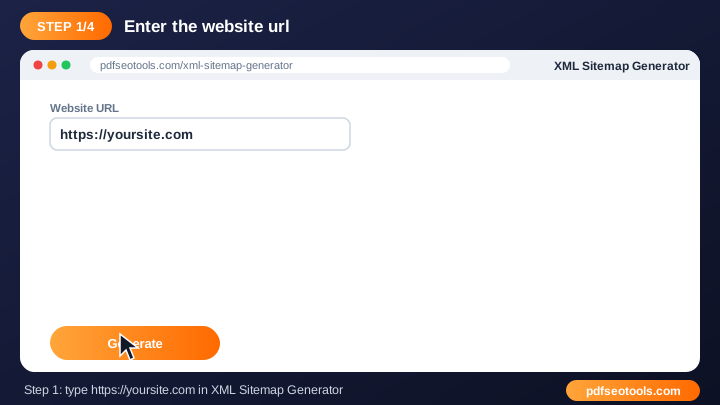
Step 1: Enter the URL
Enter the URL, code or details requested by the tool. Make sure you use the original, best-quality input you have – a clean source always gives a cleaner result.
Step 2: Select any options shown on the page
Select any options shown on the page. The default settings work for most people, so change them only if you need a specific size, format or style.
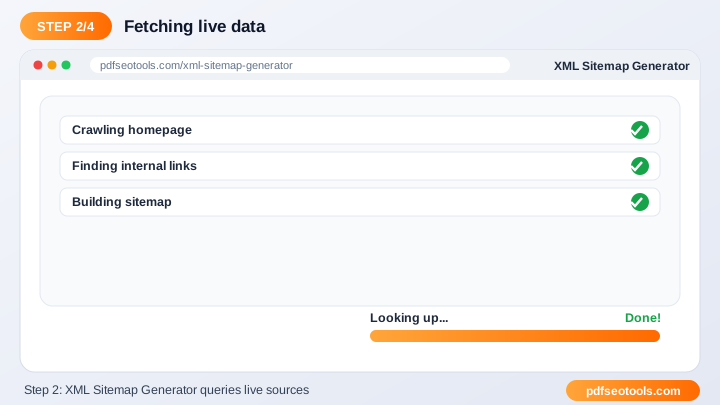
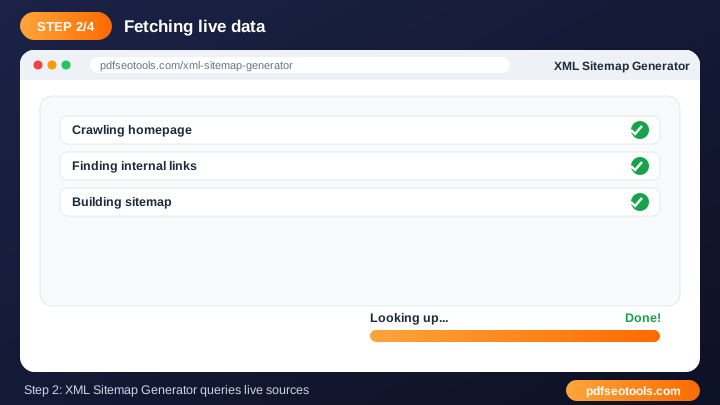
Step 3: Click the main button to run the tool
Click the main button to run the tool. Processing usually takes a few seconds. Keep the browser tab open until the result appears.
Step 4: Review
Review, copy or download the result. Save the result with a descriptive file name so you can find it later, and keep your original as a backup.
When the result is ready you can download or copy it immediately. Try the XML Sitemap Generator now and see how quickly it works.
Online XML Sitemap Generator vs Other Methods
The table below compares doing the job by hand, with desktop software and with a free online tool.
| Criteria | Manual method | Desktop software | XML Sitemap Generator |
|---|---|---|---|
| Cost | Your time | Often paid | Free |
| Installation | None | Required | None |
| Works on mobile | Difficult | Limited | Yes |
| Learning curve | High | Medium | Low |
| Speed | Slow | Medium | Seconds |
Key Features to Look For
- Made for webmasters: Solves everyday website tasks in one place.
- Fast results: Get output or reports in seconds.
- Free: Use the XML Sitemap Generator at no cost.
- No technical setup: No plugins or server access needed to try it.
- Works on any device: Desktop, tablet and mobile supported.
- SEO friendly: Helps you build faster, cleaner and better-optimised websites.
Common Problems and How to Fix Them
URL cannot be checked
Make sure the URL starts with https:// and the website is online and public.
Result differs from my browser
Caching, location and device type can change what a server returns.
Generated code does not work
Paste the code in the correct place (for example inside <head>) and clear your cache.
Mistakes to Avoid
- Uploading changed files without a backup.
- Testing only the desktop version of a site.
- Forgetting to clear cache after making changes.
- Editing .htaccess or code directly on the live site without testing.
Tips for Best Results
- Test changes on a staging site before going live.
- Keep a backup of files before you replace them.
- Re-run the tool after every major update.
- Combine it with our SEO Score Checker for a complete audit.
Related Tasks You Can Do
Ping Website Tool
Pinging sends a signal to search and update services that your site has new content, which can help new posts get discovered faster. It is useful for announcing new blog posts, faster discovery, blog promotion. Try Ping Website Tool.
HTTP Header Checker
HTTP headers reveal how a server responds: status codes, caching, compression and security policies. They are essential for technical SEO. It is useful for checking redirects, verifying caching, security header audits. Try HTTP Header Checker.
Htaccess Redirect Generator
The .htaccess file on Apache and LiteSpeed servers (including Hostinger) controls redirects. One preferred URL version avoids duplicate content. It is useful for forcing https, choosing www or non-www, fixing duplicate content. Try Htaccess Redirect Generator.
Worked Example
Example: a site can be opened at four addresses – http, https, with and without www. Adding a 301 redirect in .htaccess sends every version to https://www.yoursite.com, so search engines see one preferred URL instead of four duplicates.
Quick Reference Table
| Status code | Meaning | SEO effect |
|---|---|---|
| 200 | OK – page loaded | Indexable |
| 301 | Moved permanently | Passes ranking signals |
| 302 | Moved temporarily | Original URL kept |
| 404 | Not found | Remove or redirect |
| 500 | Server error | Fix quickly |
Glossary of Key Terms
- Sitemap
- An XML file listing the URLs you want search engines to crawl.
- 301 redirect
- A permanent redirect that passes ranking signals to the new URL.
- Minification
- Removing unnecessary characters from code to reduce size.
- HTTP headers
- Information a server sends with every response, such as status and caching.
- Core Web Vitals
- Google's page experience metrics for loading, interactivity and visual stability.
Best Practices
Back up files before editing .htaccess or templates, test changes on a staging site, submit your sitemap in Google Search Console and re-check speed and headers after every major update.
Key Takeaways
- To create an xml sitemap and submit it to google, open the free XML Sitemap Generator on pdfseotools.com, enter the URL, code or details requested by the tool, then run the tool and download or copy the result.
- Test changes on a staging site before going live.
- Keep a backup of files before you replace them.
- Use the free XML Sitemap Generator to get the job done in seconds.
Related Free Tools
- Ping Website Tool – Ping your website and notify search engines and blog directories about new content.
- HTTP Header Checker – Check the HTTP response headers of any URL – status code, cache, security and redirect headers.
- Htaccess Redirect Generator – Generate .
Explore all Free Webmaster Tools on pdfseotools.com.
Frequently Asked Questions
Where do I upload the sitemap?
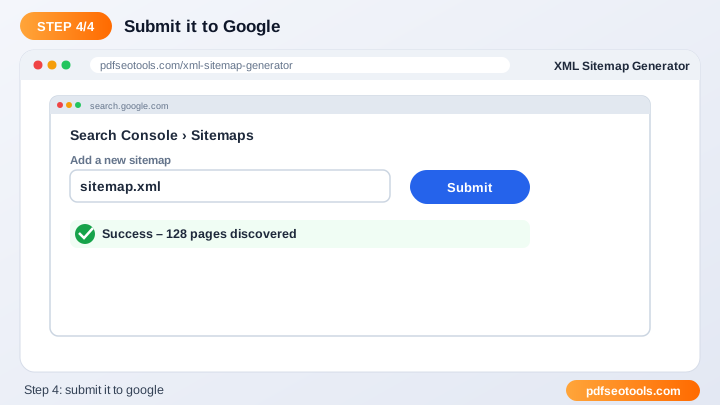
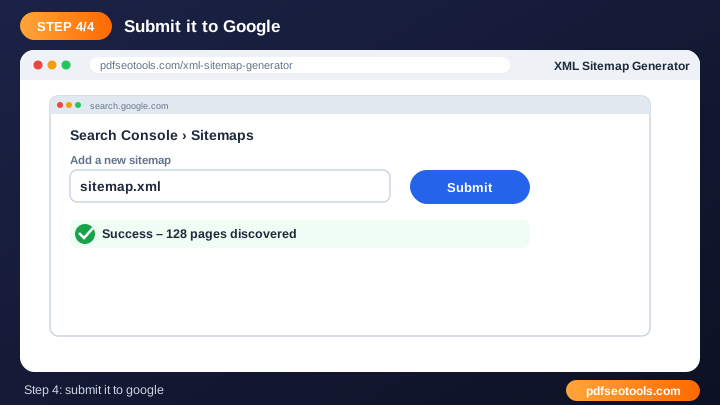
Upload sitemap.xml to your site root and submit it in Search Console.
How often should I update it?
Whenever you add or remove pages.
Is it free?
Yes, completely free.
Is it free to use?
Yes. All tools mentioned in this guide are free on pdfseotools.com, with no sign-up and no installation.
Does it work on mobile?
Yes. The tools work in Chrome, Safari, Firefox and Edge on Android, iPhone, Windows and Mac.
Conclusion
How to Create an XML Sitemap and Submit It to Google is quick and easy with the right tool. Bookmark the XML Sitemap Generator and explore more webmaster tools to finish your work faster – free, secure and on any device.