
How to Do Keyword Research for Free (Beginner Guide)

To do keyword research for free, open the free Keyword Research Tool on pdfseotools.com, enter your keyword, and your domain if the tool asks for it, then run the tool and download or copy the result. It takes under a minute, works on mobile and desktop, and needs no sign-up.


What Is Keyword Research Tool and Why Use It?
Keyword research finds the words people type into search engines. Targeting the right keywords brings relevant traffic and better conversions.
Discover keyword ideas for SEO and content marketing.
You can use it for tasks such as: finding blog ideas, planning website pages, ppc campaigns, niche research.
How to Do Keyword Research for Free – Step-by-Step
Follow these 4 simple steps. Each step takes only a few seconds.
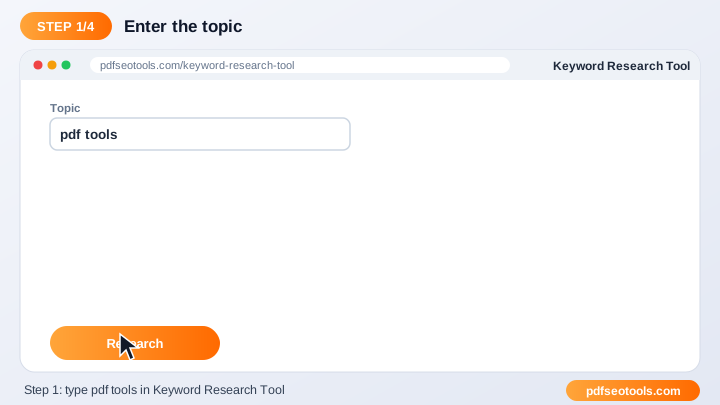
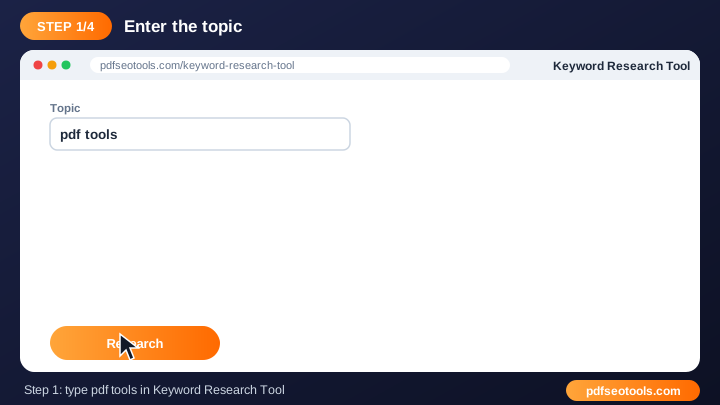
Step 1: Enter your keyword
Enter your keyword, and your domain if the tool asks for it. Make sure you use the original, best-quality input you have – a clean source always gives a cleaner result.
Step 2: Choose the country or other options if available
Choose the country or other options if available. The default settings work for most people, so change them only if you need a specific size, format or style.
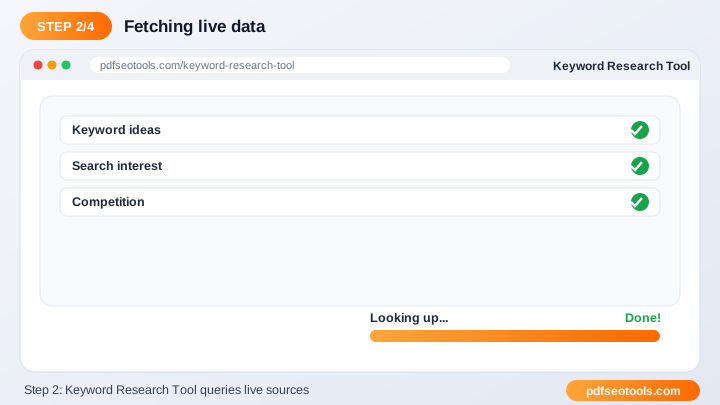
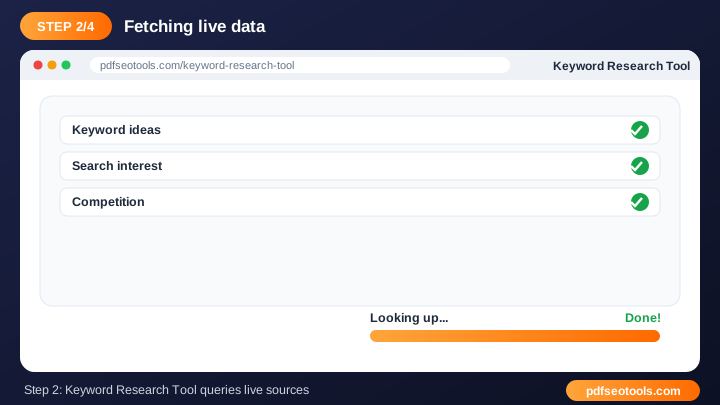
Step 3: Click the check button
Click the check button. Processing usually takes a few seconds. Keep the browser tab open until the result appears.
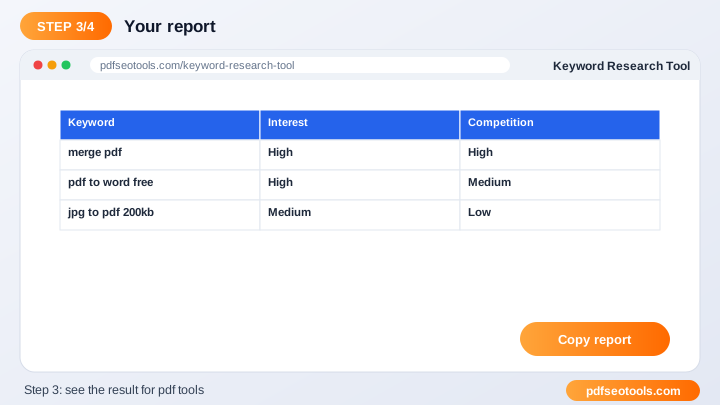
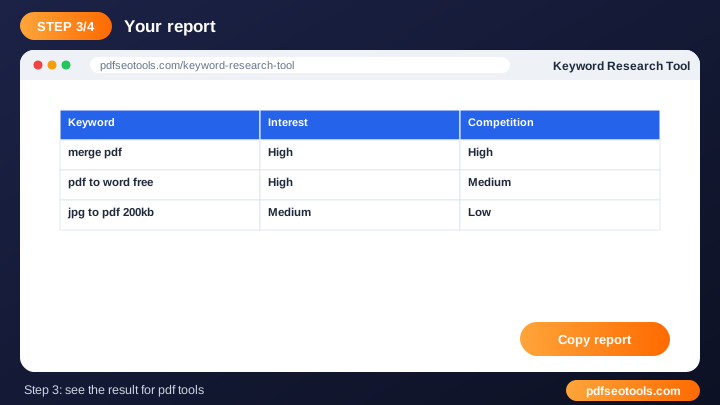
Step 4: Analyse the results
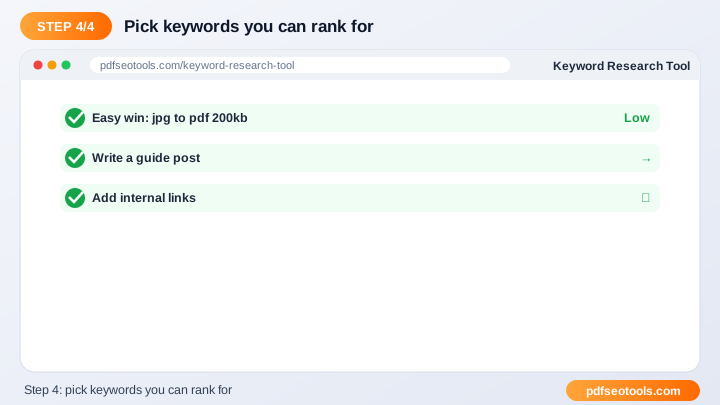
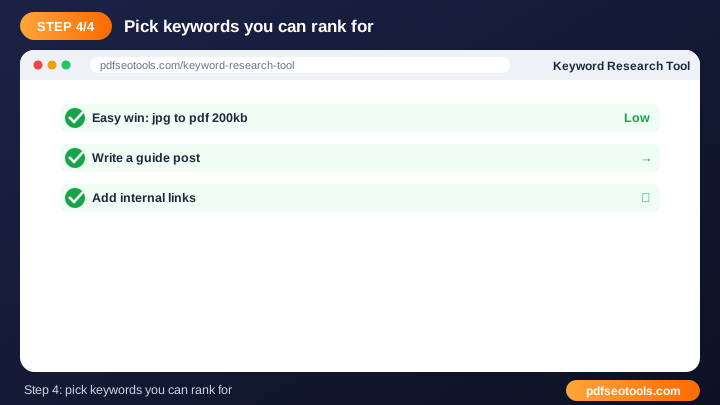
Analyse the results and use them in your content plan. Save the result with a descriptive file name so you can find it later, and keep your original as a backup.
When the result is ready you can download or copy it immediately. Try the Keyword Research Tool now and see how quickly it works.
Online Keyword Research Tool vs Other Methods
The table below compares doing the job by hand, with desktop software and with a free online tool.
| Criteria | Manual method | Desktop software | Keyword Research Tool |
|---|---|---|---|
| Cost | Your time | Often paid | Free |
| Installation | None | Required | None |
| Works on mobile | Difficult | Limited | Yes |
| Learning curve | High | Medium | Low |
| Speed | Slow | Medium | Seconds |
Key Features to Look For
- Keyword insights: Find data that helps you choose better keywords.
- Fast research: Get results in seconds.
- Free: Use the Keyword Research Tool without a paid SEO subscription.
- Beginner friendly: Clear results that are easy to act on.
- Content planning: Turn data into blog titles, headings and pages.
- Works anywhere: Use it on mobile or desktop.
Common Problems and How to Fix Them
No keyword data is returned
Try a broader keyword or check the spelling.
Rankings differ from my own search
Search results depend on location, device and personalisation.
Too many keyword ideas
Filter by relevance to your page and search intent.
Mistakes to Avoid
- Targeting only very competitive short keywords.
- Ignoring search intent.
- Keyword stuffing instead of writing naturally.
- Checking rankings only once instead of tracking over time.
Tips for Best Results
- Target long-tail keywords for faster rankings on new websites.
- Match search intent – informational, commercial or transactional.
- Use the keyword naturally; avoid keyword stuffing.
- Track results monthly to see progress.
Related Tasks You Can Do
Related Keywords Finder
Related keywords help search engines understand your topic in depth. Using them in headings and paragraphs improves relevance and coverage. It is useful for planning blog topics, writing headings, lsi/semantic seo. Try Related Keywords Finder.
Keyword Density Checker
Keyword density is how often a word appears compared with the total words. The checker helps you use keywords naturally and avoid stuffing. It is useful for optimising blog posts, avoiding keyword stuffing, competitor analysis. Try Keyword Density Checker.
SERP Checker
A SERP checker shows the pages that rank for a keyword. Studying the top results reveals search intent and what content you need to compete. It is useful for competitor research, content planning, tracking rankings. Try SERP Checker.
Worked Example
Example: 'pdf' is too broad for a new site, but 'compress pdf to 100kb for online form' is specific, matches a clear need and has less competition. A focused guide plus a link to the PDF Compressor answers that search perfectly.
Quick Reference Table
| Search intent | Example query | Best content |
|---|---|---|
| Informational | what is a pdf | Guide or blog post |
| Navigational | pdfseotools merge pdf | Tool or brand page |
| Commercial | best free pdf tools | Comparison / list |
| Transactional | compress pdf online | Tool page |
Glossary of Key Terms
- Keyword
- A word or phrase people type into a search engine.
- Long-tail keyword
- A longer, more specific phrase that is usually easier to rank for.
- Search intent
- The goal behind a search: learn, find, compare or buy.
- SERP
- Search Engine Results Page.
- Keyword density
- How often a keyword appears compared with the total word count.
Best Practices
Target one main keyword per page, match the search intent, use related terms naturally in headings and text, and track rankings monthly instead of daily.
Key Takeaways
- To do keyword research for free, open the free Keyword Research Tool on pdfseotools.com, enter your keyword, and your domain if the tool asks for it, then run the tool and download or copy the result.
- Target long-tail keywords for faster rankings on new websites.
- Match search intent – informational, commercial or transactional.
- Use the free Keyword Research Tool to get the job done in seconds.
Related Free Tools
- Related Keywords Finder – Find related keywords and long-tail phrases for any topic.
- Keyword Density Checker – Check keyword density and the most-used words and phrases on any page or text.
- SERP Checker – Check search engine result pages (SERPs) for any keyword and see which websites rank on top.
Explore all Free Keyword Tools on pdfseotools.com.
Frequently Asked Questions
What are long-tail keywords?
Longer, specific phrases that are easier to rank for.
How do I choose keywords?
Balance search demand, competition and relevance to your business.
Is it free?
Yes, completely free.
Is it free to use?
Yes. All tools mentioned in this guide are free on pdfseotools.com, with no sign-up and no installation.
Does it work on mobile?
Yes. The tools work in Chrome, Safari, Firefox and Edge on Android, iPhone, Windows and Mac.
Conclusion
How to Do Keyword Research for Free is quick and easy with the right tool. Bookmark the Keyword Research Tool and explore more keyword tools to finish your work faster – free, secure and on any device.