How to Write Meta Title and Description Tags for SEO

To write meta title and description tags for seo, open the free Meta Tag Generator on pdfseotools.com, enter your page URL or fill in your page details, then run the tool and download or copy the result. It takes under a minute, works on mobile and desktop, and needs no sign-up.
What Is Meta Tag Generator and Why Use It?
A meta tag generator creates correct HTML code for the head section of your page, so search engines show a better title and snippet.
Generate SEO-friendly meta tags for your website – title, description, keywords, robots and more.
You can use it for tasks such as: launching a new website, improving click-through rate, blogger and wordpress seo, fixing missing meta tags.
How to Write Meta Title and Description Tags for SEO – Step-by-Step
Follow these 4 simple steps. Each step takes only a few seconds.
Step 1: Enter your page URL or fill in your page details
Enter your page URL or fill in your page details. Make sure you use the original, best-quality input you have – a clean source always gives a cleaner result.
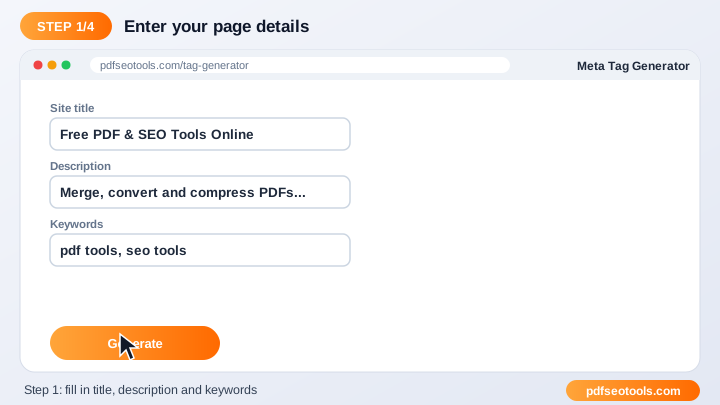
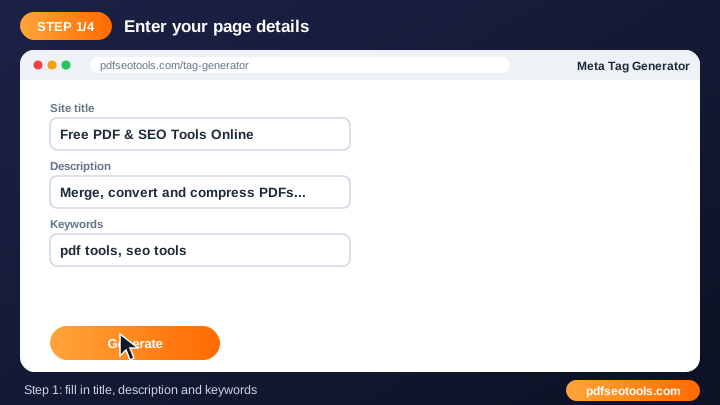
Step 2: Click the generate / analyze button
Click the generate / analyze button. The default settings work for most people, so change them only if you need a specific size, format or style.
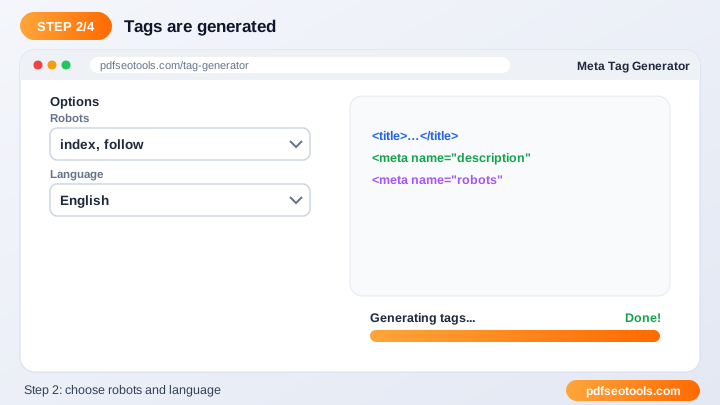
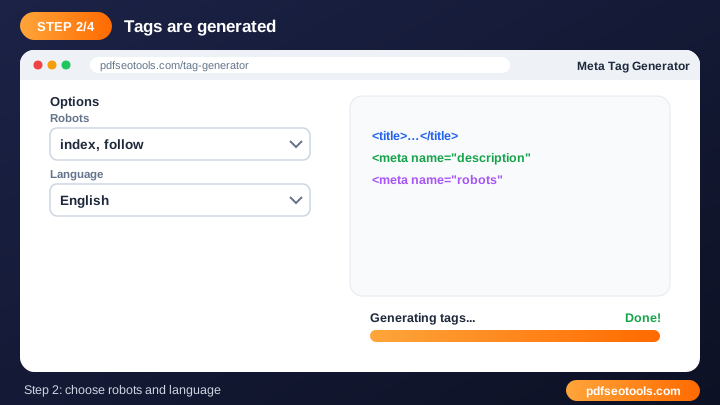
Step 3: Review the meta tags
Review the meta tags and suggestions. Processing usually takes a few seconds. Keep the browser tab open until the result appears.
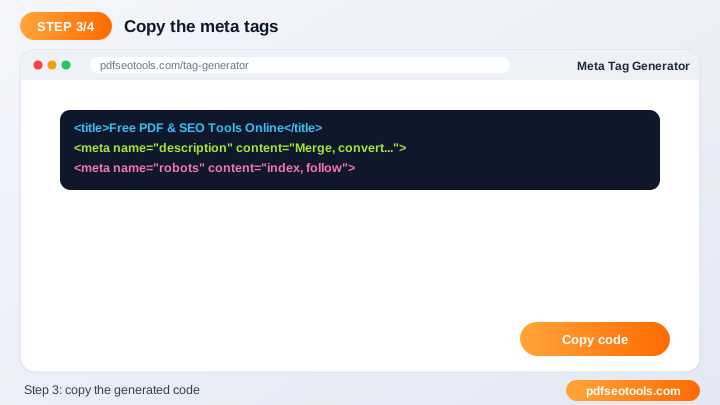
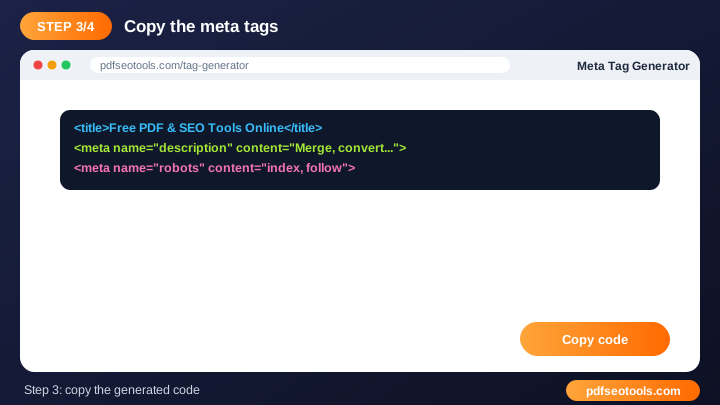
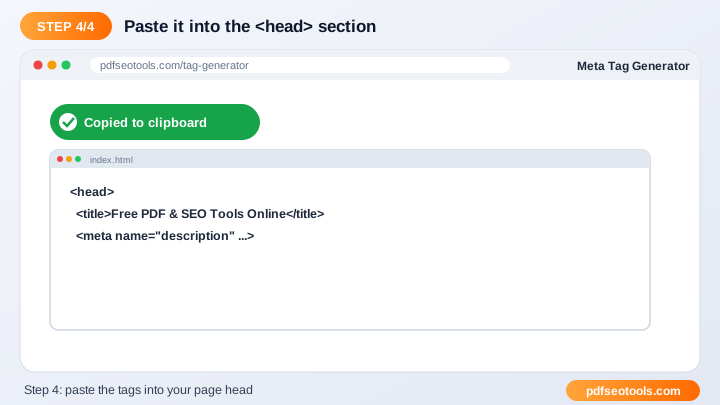
Step 4: Copy the code or fix the issues on your website
Copy the code or fix the issues on your website. Save the result with a descriptive file name so you can find it later, and keep your original as a backup.
When the result is ready you can download or copy it immediately. Try the Meta Tag Generator now and see how quickly it works.
Online Meta Tag Generator vs Other Methods
The table below compares doing the job by hand, with desktop software and with a free online tool.
| Criteria | Manual method | Desktop software | Meta Tag Generator |
|---|---|---|---|
| Cost | Your time | Often paid | Free |
| Installation | None | Required | None |
| Works on mobile | Difficult | Limited | Yes |
| Learning curve | High | Medium | Low |
| Speed | Slow | Medium | Seconds |
Key Features to Look For
- SEO focused: Built around the meta tags search engines actually use.
- Instant output: Get results or ready-made code in seconds.
- Free: Use the Meta Tag Generator as often as you like.
- Beginner friendly: Clear guidance even if you are new to SEO.
- Works with any CMS: WordPress, Blogger, Laravel, Shopify or hand-coded sites.
- Mobile ready: Use it from any device.
Common Problems and How to Fix Them
Meta tags not detected
Make sure the page is public and not blocked by robots or a login.
Google shows a different title
Google may rewrite titles; keep titles relevant, unique and around 50–60 characters.
Changes not visible
Clear your site and browser cache, then re-check the page.
Mistakes to Avoid
- Using the same title and description on many pages.
- Writing titles longer than about 60 characters.
- Stuffing keywords into meta tags.
- Forgetting to add Open Graph tags for social sharing.
Tips for Best Results
- Keep titles around 50–60 characters and descriptions around 150–160 characters.
- Use your main keyword naturally near the start of the title.
- Write a unique title and description for every page.
- Re-check pages after updating your theme or plugins.
Related Tasks You Can Do
Meta Tag Analyzer
Meta tags tell search engines and social networks what a page is about. The analyzer shows what is present, what is missing and how to improve it. It is useful for auditing your pages, checking competitor titles, fixing missing descriptions. Try Meta Tag Analyzer.
Open Graph Generator
Open Graph tags (og:title, og:image, og:description) tell social platforms what to display when someone shares your URL. It is useful for better whatsapp and facebook previews, social media marketing, blog sharing. Try Open Graph Generator.
Twitter Card Generator
Twitter Cards control how your page looks when shared on X. A rich card with an image gets more clicks than a plain link. It is useful for improving social clicks, blog post sharing, product promotion. Try Twitter Card Generator.
Worked Example
Example: a page titled 'Home' gets few clicks. Changing the title to 'Free PDF Tools – Merge, Convert & Compress | Brand' and writing a 150-character description that matches the search intent makes the result clearer and more clickable.
Quick Reference Table
| Tag | Recommended length | Purpose |
|---|---|---|
| Title | 50–60 characters | Headline in search results |
| Meta description | 140–155 characters | Snippet under the title |
| OG title | 50–60 characters | Social share headline |
| OG description | 65–120 characters | Social share text |
Glossary of Key Terms
- Title tag
- The clickable headline shown in search results.
- Meta description
- The short summary that often appears under the title.
- Robots tag
- Tells search engines whether to index a page and follow its links.
- Open Graph
- Tags that control how links look on Facebook, WhatsApp and LinkedIn.
- Twitter card
- Tags that control link previews on X (Twitter).
Best Practices
Write a unique title and description for every page, put the main keyword near the start, keep within the recommended lengths and add Open Graph tags so shared links look professional.
Key Takeaways
- To write meta title and description tags for seo, open the free Meta Tag Generator on pdfseotools.com, enter your page URL or fill in your page details, then run the tool and download or copy the result.
- Keep titles around 50–60 characters and descriptions around 150–160 characters.
- Use your main keyword naturally near the start of the title.
- Use the free Meta Tag Generator to get the job done in seconds.
Related Free Tools
- Meta Tag Analyzer – Analyse the meta tags of any web page – title, description, keywords, robots and Open Graph tags.
- Open Graph Generator – Create Open Graph meta tags for perfect link previews on Facebook, WhatsApp, LinkedIn and more.
- Twitter Card Generator – Generate Twitter (X) Card meta tags so your links show a rich preview with image, title and description.
Explore all Free Meta Tag Tools on pdfseotools.com.
Frequently Asked Questions
Where do I paste the code?
Inside the <head> section of your page.
Will it improve rankings?
Good titles and descriptions improve relevance and clicks.
Is it free?
Yes.
Is it free to use?
Yes. All tools mentioned in this guide are free on pdfseotools.com, with no sign-up and no installation.
Does it work on mobile?
Yes. The tools work in Chrome, Safari, Firefox and Edge on Android, iPhone, Windows and Mac.
Conclusion
How to Write Meta Title and Description Tags for SEO is quick and easy with the right tool. Bookmark the Meta Tag Generator and explore more meta tag tools to finish your work faster – free, secure and on any device.