JPG vs PNG vs WEBP vs SVG: Which Image Format to Use?

WEBP images are typically much smaller than PNG while looking the same. Image tools help you convert formats, shrink file sizes, resize photos and create graphics such as favicons and memes. This guide explains the basics in simple words, with tables, examples and free tools you can try right away.
JPG vs PNG vs WEBP vs SVG – The Short Answer
Image tools help you convert formats, shrink file sizes, resize photos and create graphics such as favicons and memes. Optimised images make websites faster and uploads easier.
The tool reads the pixels and metadata of your image, applies the selected operation – such as conversion, resizing or compression – and encodes a new image file in the chosen format. Colour profiles and dimensions are handled automatically so the result is ready to use.
Quick Reference Table
| Format | Compression | Transparency | Best for |
|---|---|---|---|
| JPG | Lossy | No | Photos |
| PNG | Lossless | Yes | Screenshots, logos |
| WEBP | Lossy or lossless | Yes | Websites |
| SVG | Vector | Yes | Logos and icons |
| HEIC | Lossy (efficient) | Yes | iPhone photos |
| AVIF | Lossy (very efficient) | Yes | Modern websites |
Tables like this make it easy to compare options at a glance. Bookmark this page to use it as a quick reference.
How PNG to WEBP Converter Works in Practice
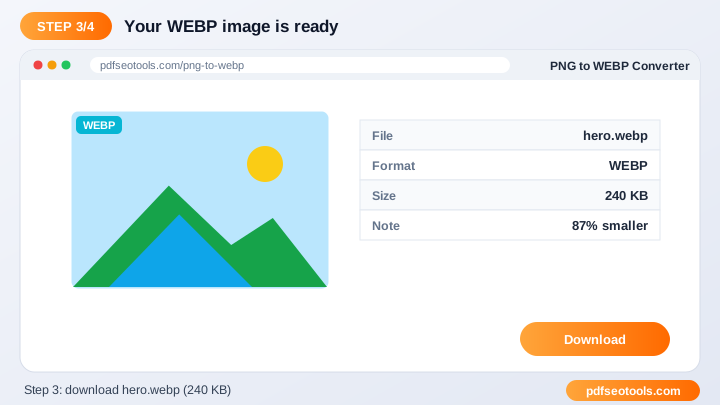
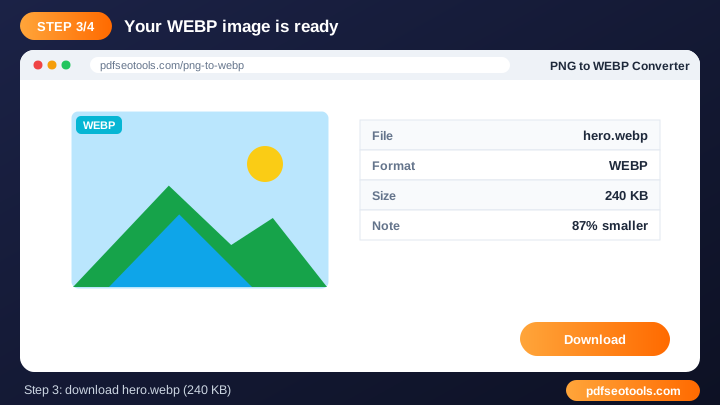
WEBP images are typically much smaller than PNG while looking the same. Google recommends modern formats like WEBP for faster loading pages.
Where This Is Used
- Optimising website images
- Improving PageSpeed scores
- Reducing bandwidth
- Keeping transparency with small files
Tools That Help
PNG to JPG Converter
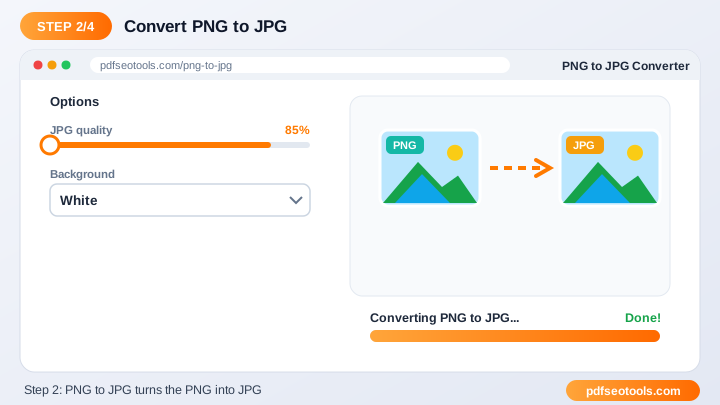
Convert PNG images to JPG online to reduce file size. Ideal for photos, websites and quick sharing. Use PNG to JPG Converter free.
JPG to PNG Converter
Convert JPG images to PNG format online for free. Get lossless images suitable for editing, graphics and screenshots. Use JPG to PNG Converter free.
SVG to PNG
Convert SVG vector files into PNG images online. Get a ready-to-use picture for social media, documents and apps that do not support SVG. Use SVG to PNG free.
Why It Matters
- Free and unlimited: Edit and convert images with the PNG to WEBP Converter at no cost.
- High-quality output: Smart processing keeps colours and details sharp.
- Browser based: No Photoshop or desktop app is needed – it works in any browser.
- Mobile friendly: Use it on Android and iPhone just as easily as on a PC.
- Privacy first: Your images are not shared and are cleared from our server after use.
- Popular formats: Supports common formats like JPG, PNG, WEBP, SVG, GIF and more where relevant.
Real-World Use Cases
Using PNG to WEBP Converter
WEBP images are typically much smaller than PNG while looking the same. Google recommends modern formats like WEBP for faster loading pages. Common uses: optimising website images, improving pagespeed scores, reducing bandwidth, keeping transparency with small files. Open PNG to WEBP Converter.
Using PNG to JPG Converter
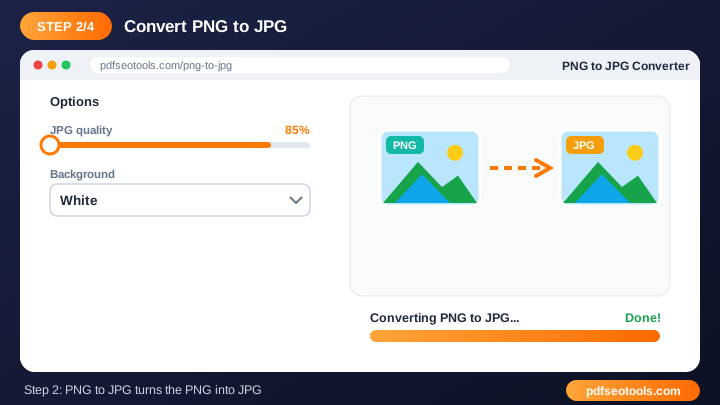
PNG files can be very large, especially for photos. JPG uses smart compression to make files much smaller while keeping them looking good, which speeds up websites. Common uses: reducing image size for websites, meeting upload limits, sharing photos faster, saving storage. Open PNG to JPG Converter.
Using JPG to PNG Converter
PNG is a lossless format, so it does not add new compression artefacts each time you save. It is preferred for graphics, text images and further editing. Common uses: preparing images for editing, saving graphics with sharp edges, creating screenshots for tutorials, uploading to sites that require png. Open JPG to PNG Converter.
Using SVG to PNG
SVG is perfect for the web, but many apps, social networks and documents need a regular image. Converting SVG to PNG renders the vector into pixels at a clear size. PNG keeps transparent backgrounds. Common uses: posting logos on social media, adding graphics to word or slides, using icons in apps, sending designs to clients. Open SVG to PNG.
Key Facts to Remember
- Start with the highest-resolution image you have.
- Use WEBP or compressed JPG for websites to improve page speed.
- Use PNG when you need a transparent background.
- Add descriptive file names and alt text when you upload images to your site for better image SEO.
Common Misunderstandings
- Starting from a small, low-quality image and expecting a sharp result.
- Saving photos as PNG when a smaller JPG or WEBP would do.
- Stretching an image by not keeping the aspect ratio.
- Forgetting to add alt text when publishing images on a website.
How to Get Started
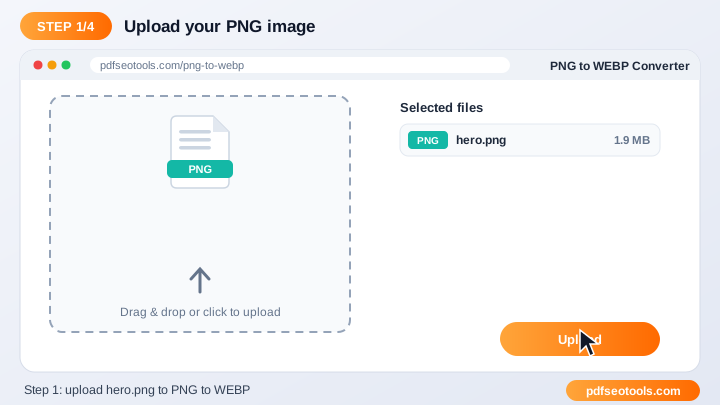
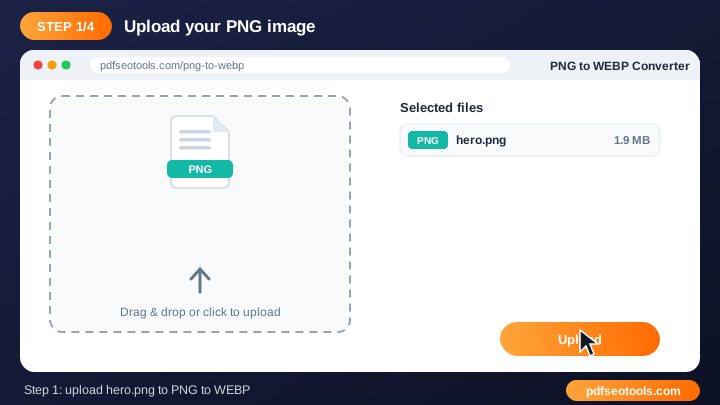
- Upload your image by clicking the upload box or dragging the file onto it.
- Adjust the available settings such as size, quality or output format.
- Click the action button to start processing.
- Preview the result and download the new image to your device.
Worked Example
Example: a 5 MB photo from a phone is uploaded to a blog post and slows the page down. Resizing it to 1200 px wide and converting it to WEBP can reduce it to well under 200 KB while it still looks sharp on screen, which makes the page load noticeably faster.
Glossary of Key Terms
- Resolution
- The number of pixels in an image, for example 1920 × 1080.
- Lossy compression
- Removes some image data to make files smaller (JPG, lossy WEBP).
- Lossless compression
- Shrinks files without losing any image data (PNG).
- Aspect ratio
- The relationship between width and height, such as 16:9 or 1:1.
- Alt text
- A short text description of an image used by screen readers and search engines.
Best Practices
Resize images to the largest size they will actually be displayed, choose WEBP or compressed JPG for photos, PNG or SVG for logos, and always add descriptive file names and alt text. Keep the original high-resolution file in case you need to print it later.
How It Works Behind the Scenes
The tool reads the pixels and metadata of your image, applies the selected operation – such as conversion, resizing or compression – and encodes a new image file in the chosen format. Colour profiles and dimensions are handled automatically so the result is ready to use.
Key Takeaways
- WEBP images are typically much smaller than PNG while looking the same.
- Start with the highest-resolution image you have.
- Use WEBP or compressed JPG for websites to improve page speed.
- Use the free PNG to WEBP Converter to get the job done in seconds.
Related Free Tools
- PNG to JPG Converter – Convert PNG images to JPG online to reduce file size.
- JPG to PNG Converter – Convert JPG images to PNG format online for free.
- SVG to PNG – Convert SVG vector files into PNG images online.
Explore all Free Online Image Tools on pdfseotools.com.
Frequently Asked Questions
Do all browsers support WEBP?
All modern browsers support WEBP.
Is transparency supported?
Yes, WEBP supports transparency.
Will it improve SEO?
Faster images help Core Web Vitals and rankings.
Is it free to use?
Yes. All tools mentioned in this guide are free on pdfseotools.com, with no sign-up and no installation.
Does it work on mobile?
Yes. The tools work in Chrome, Safari, Firefox and Edge on Android, iPhone, Windows and Mac.
Conclusion
JPG vs PNG vs WEBP vs SVG is quick and easy with the right tool. Bookmark the PNG to WEBP Converter and explore more image tools to finish your work faster – free, secure and on any device.