
JSON vs XML: Differences, Examples and How to Convert

JSON and XML are both data formats. Developer tools format, validate and convert data so you can debug APIs and configuration files faster. This guide explains the basics in simple words, with tables, examples and free tools you can try right away.


JSON vs XML – The Short Answer
Developer tools format, validate and convert data so you can debug APIs and configuration files faster.
Your data is parsed using a standards-compliant parser. If it is valid, it is transformed – formatted, converted or generated – and returned instantly. If it is invalid, the tool shows where the error is so you can fix it.
Quick Reference Table
| Feature | JSON | XML |
|---|---|---|
| Syntax | Key–value pairs, arrays | Nested tags |
| Readability | Compact | Verbose |
| Comments | Not allowed | Allowed |
| Common use | Web APIs, configs | Feeds, sitemaps, legacy APIs |
Tables like this make it easy to compare options at a glance. Bookmark this page to use it as a quick reference.
How JSON to XML Works in Practice
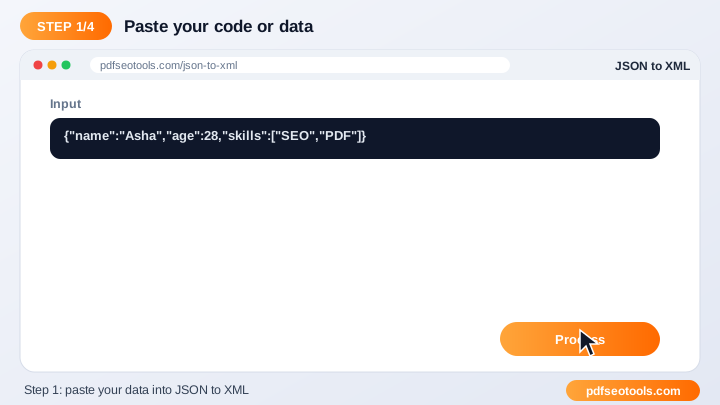
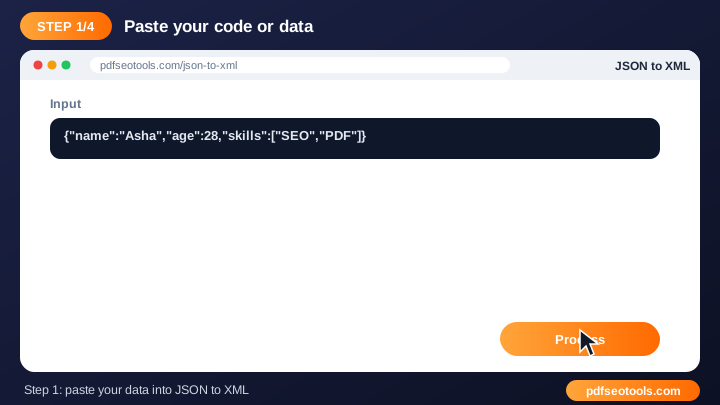
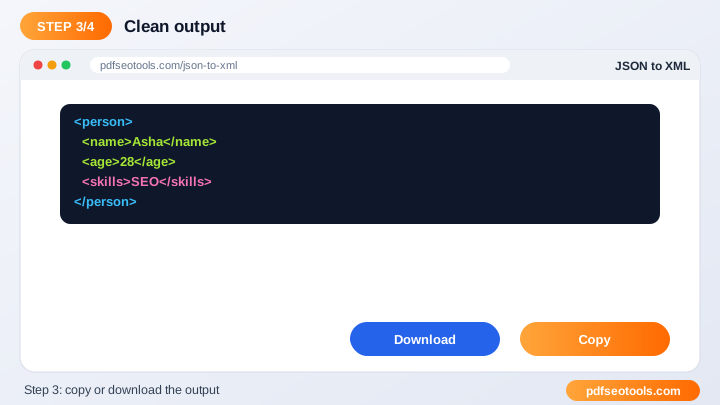
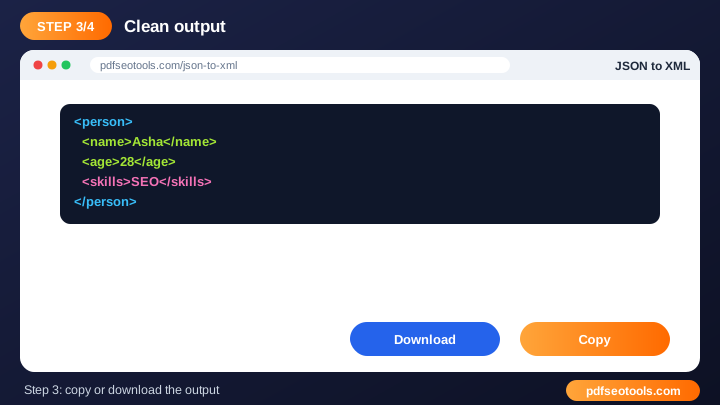
JSON and XML are both data formats. Some systems, APIs and feeds still require XML, so converting JSON to XML saves manual rewriting.
Where This Is Used
- Integrating with XML APIs
- Creating data feeds
- Migrating data
- Testing integrations
Tools That Help
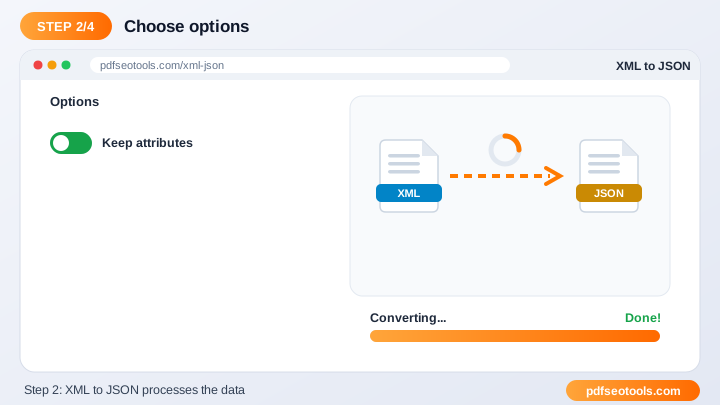
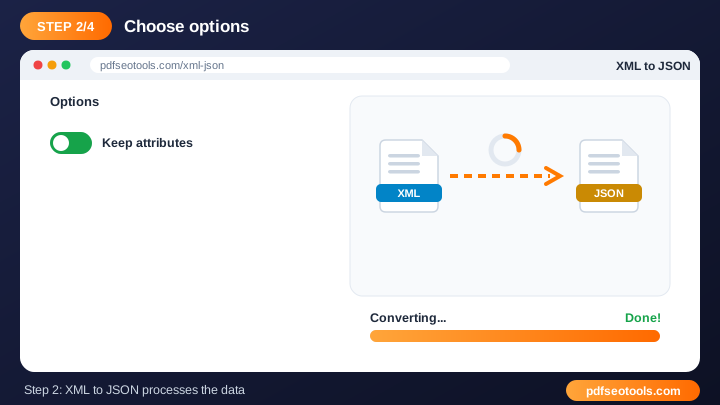
XML to JSON
Convert XML data into JSON format online. Use XML to JSON free.
JSON Formatter
Format and pretty-print JSON with proper indentation online. Use JSON Formatter free.
XML Formatter
Format and beautify XML online with proper indentation. Use XML Formatter free.
Why It Matters
- Developer friendly: Clean output that is ready to use in code.
- Error detection: Highlights invalid input so you can fix it quickly.
- Fast: Processes data instantly in the browser or on our server.
- Free: Use the JSON to XML without an account.
- Works everywhere: No IDE or plugin required.
- Privacy: Your data is not shared or published.
Real-World Use Cases
Using JSON to XML
JSON and XML are both data formats. Some systems, APIs and feeds still require XML, so converting JSON to XML saves manual rewriting. Common uses: integrating with xml apis, creating data feeds, migrating data, testing integrations. Open JSON to XML.
Using XML to JSON
Modern apps and JavaScript work best with JSON. Converting XML feeds and responses to JSON makes them easy to use in code. Common uses: using xml apis in javascript, converting rss feeds, data migration, testing. Open XML to JSON.
Using JSON Formatter
A JSON formatter adds line breaks and indentation to compact JSON so it is easy to read and debug. Common uses: reading api responses, cleaning config files, code reviews, documentation. Open JSON Formatter.
Using XML Formatter
An XML formatter makes compact XML readable by adding line breaks and indentation, which helps when debugging feeds and sitemaps. Common uses: reading sitemaps, debugging feeds, editing config files, documentation. Open XML Formatter.
Key Facts to Remember
- Validate data before using it in production.
- Keep sensitive keys and passwords out of shared snippets.
- Use consistent indentation across your project.
- Bookmark the tool for daily debugging.
Common Misunderstandings
- Using single quotes in JSON instead of double quotes.
- Leaving a trailing comma after the last item.
- Pasting secrets such as API keys into shared snippets.
- Using placeholder data in production.
How to Get Started
- Paste your code or data into the input box (or upload a file where supported).
- Choose any options such as indentation.
- Click the action button.
- Copy or download the output.
Worked Example
Example: an API returns one long line of JSON and the app crashes. Pasting it into a JSON Validator reveals a trailing comma on line 1; after removing it, the formatter shows clean, indented data that is easy to debug.
Glossary of Key Terms
- JSON
- JavaScript Object Notation – a lightweight data format of keys and values.
- XML
- Extensible Markup Language – a tag-based data format.
- Validation
- Checking that data follows the correct syntax rules.
- Minify
- Removing spaces and line breaks to make data smaller.
- UUID
- A 128-bit identifier that is practically unique.
Best Practices
Validate data before using it, never paste secrets such as API keys into shared tools or snippets, keep consistent indentation in your project and use generated test data only in development.
How It Works Behind the Scenes
Your data is parsed using a standards-compliant parser. If it is valid, it is transformed – formatted, converted or generated – and returned instantly. If it is invalid, the tool shows where the error is so you can fix it.
Key Takeaways
- JSON and XML are both data formats.
- Validate data before using it in production.
- Keep sensitive keys and passwords out of shared snippets.
- Use the free JSON to XML to get the job done in seconds.
Related Free Tools
- XML to JSON – Convert XML data into JSON format online.
- JSON Formatter – Format and pretty-print JSON with proper indentation online.
- XML Formatter – Format and beautify XML online with proper indentation.
Explore all Free Developer Tools on pdfseotools.com.
Frequently Asked Questions
Is nested JSON supported?
Yes, nested objects and arrays are converted.
Is my data stored?
No.
Is it free?
Yes.
Is it free to use?
Yes. All tools mentioned in this guide are free on pdfseotools.com, with no sign-up and no installation.
Does it work on mobile?
Yes. The tools work in Chrome, Safari, Firefox and Edge on Android, iPhone, Windows and Mac.
Conclusion
JSON vs XML is quick and easy with the right tool. Bookmark the JSON to XML and explore more developer tools to finish your work faster – free, secure and on any device.