Domain To IP
𝐓𝐡𝐞 𝐃𝐨𝐦𝐚𝐢𝐧 𝐓𝐨 𝐈𝐏 𝐭𝐨𝐨𝐥 𝐢𝐧𝐬𝐭𝐚𝐧𝐭𝐥𝐲 𝐭𝐫𝐚𝐧𝐬𝐥𝐚𝐭𝐞𝐬 𝐚 𝐡𝐮𝐦𝐚𝐧-𝐫𝐞𝐚𝐝𝐚𝐛𝐥𝐞 𝐰𝐞𝐛𝐬𝐢𝐭𝐞 𝐧𝐚𝐦𝐞 (𝐝𝐨𝐦𝐚𝐢𝐧) 𝐢𝐧𝐭𝐨 𝐢𝐭𝐬 𝐜𝐨𝐫𝐫𝐞𝐬𝐩𝐨𝐧𝐝𝐢𝐧𝐠 𝐧𝐮𝐦𝐞𝐫𝐢𝐜𝐚𝐥 𝐈𝐏 𝐚𝐝𝐝𝐫𝐞𝐬𝐬.
Share on Social Media:
Unlocking the Web's Hidden Address: A Guide to Domain To IP
Have you ever wondered how your computer finds the websites you visit? You type a simple, easy-to-remember name like google.com or pdfseotools.com, and within a split second, the website appears on your screen. Behind this seamless experience lies a complex system of digital addressing.
The key to this process is the conversion of a human-readable domain name into a machine-readable IP address. This is where a Domain to IP tool becomes incredibly useful for webmasters, SEO professionals, and curious internet users alike.
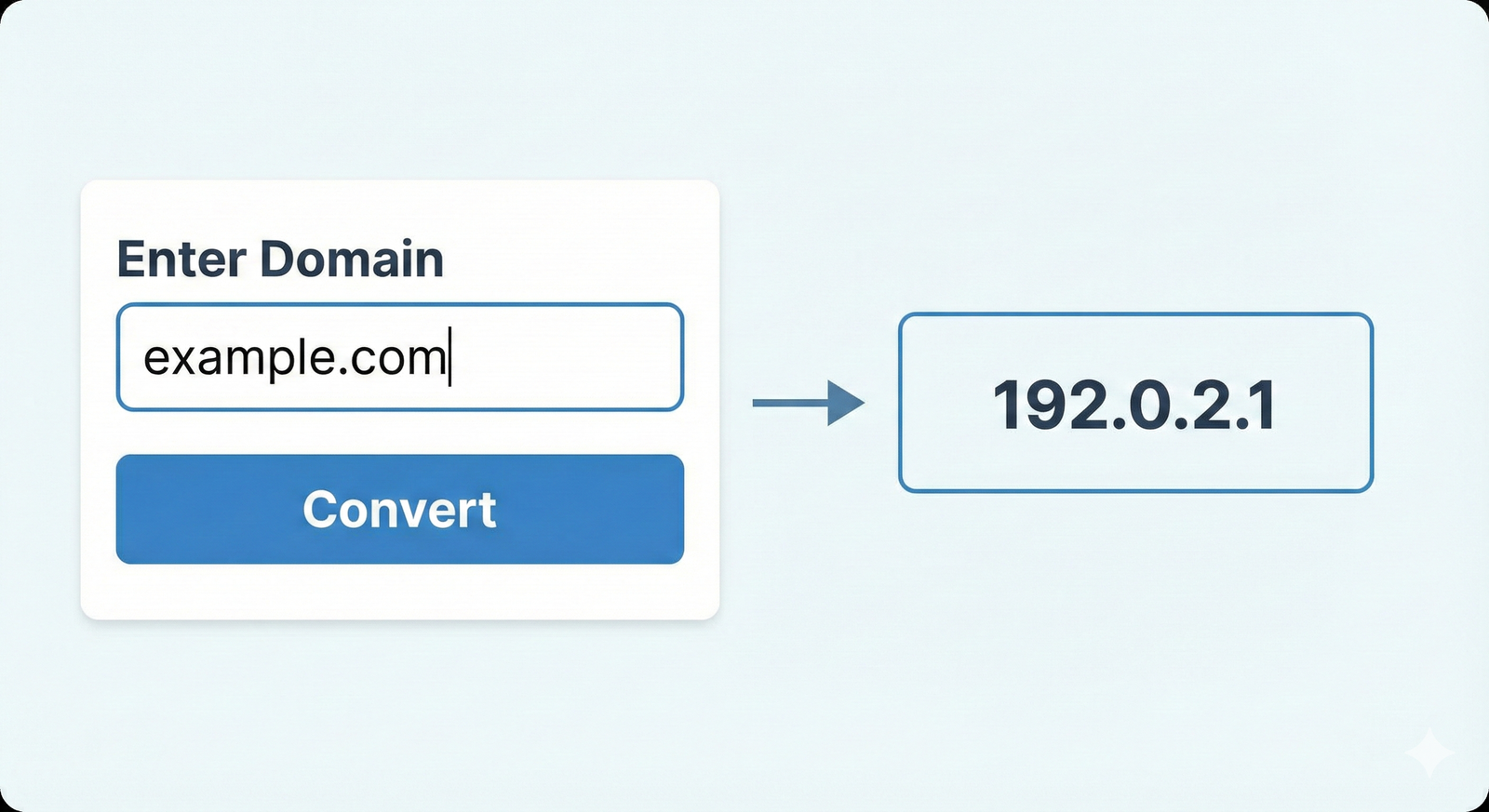
This article will explore what a Domain to IP tool does, why it's a crucial component of your GEO and SEO strategy, and how you can use the tool available at .
Understanding the Connection: Domains and IPs
Think of a domain name as the street address for a business. It's easy for people to remember and share. An IP (Internet Protocol) address, on the other hand, is like the precise GPS coordinates for that business location. It's a string of numbers (like 192.0.2.1) that computers use to communicate with each other over the internet.
A Domain to IP tool performs a process known as a DNS (Domain Name System) lookup. It takes the domain name you provide, queries a DNS server, and returns the corresponding IP address of the server where that website is hosted.
Figure 1: A visual representation of how a Domain to IP tool converts a user-friendly domain name into a machine-readable IP address.
The GEO and SEO Advantage
Knowing the IP address of a website provides more than just technical data; it offers valuable insights for Search Engine Optimization (SEO) and geographical targeting (GEO).
GEO-Location & Site Speed: Every IP address is tied to a physical server location. Search engines like Google consider server location as a factor for local search rankings. A server located closer to your target audience can lead to faster website loading times, a crucial ranking signal. A Domain to IP tool can help you verify the physical location of your (or a competitor's) server.
Identifying "Bad Neighborhoods": In the world of SEO, a "bad neighborhood" is a server or IP range hosting many spammy or malicious websites. If your website shares an IP address with such sites, it could potentially harm your own search engine rankings. By using a Domain to IP tool, you can identify the IP and then use a reverse IP lookup to see what other sites are on the same server.
Competitor Analysis: You can use this tool to find out where your competitors are hosting their websites. This can reveal if they are using a specific hosting provider known for performance or if they are part of a private blog network (PBN), which can be a useful piece of competitive intelligence.

Figure 2: An IP address is a digital identifier linked to a physical server in a specific geographical location, which impacts GEO and SEO.
How to Use the Domain To IP Tool
Using the tool is incredibly straightforward. You can access a Domain to IP tool at . Here's a simple guide:
Navigate to the Tool: Go to the Domain to IP tool page on the website.
Enter the Domain: In the provided text box, type the domain name you want to investigate (e.g., example.com). You typically don't need to include http:// or https://.
Get the IP: Click the "Convert," "Get IP," or similar button.
View the Result: The tool will instantly display the corresponding IP address for that domain.
It's a quick and free way to get essential information about any website.
frequently Asked Questions (FAQs)
Here are some common questions about Domain to IP conversion:
1. Can a single domain name have multiple IP addresses? Yes, large websites often use multiple servers with different IP addresses to balance traffic and improve reliability. A DNS lookup might return one or more of these IPs.
2. Can multiple domain names share the same IP address? Yes, this is very common with "shared hosting." Many different websites can be hosted on a single server and share its IP address.
3. Does changing my hosting provider change my website's IP address? Yes, when you move your website to a new hosting provider, it will be hosted on a new server with a different IP address. You will need to update your domain's DNS records to point to the new IP.
4. How is an IP address useful for troubleshooting a website? If a website is down, you can use its IP address to perform network tests (like a "ping") to see if the server itself is reachable, helping you determine if the issue is with the domain name or the server.
5. Is the information provided by a Domain to IP tool publicly available? Yes, the link between a domain name and its IP address is public information stored in the global Domain Name System (DNS), which is essential for the internet to function.